How to Mix Flowers for a Beautiful Garden Display
As an Amazon Associate, we earn from qualifying purchases. If you buy through an affiliate link, we may earn a commission at no extra cost to you.
Mixing flowers successfully involves more than picking colours that look good together. The flowers need compatible growing conditions, enough space and a useful balance of height, texture and bloom timing.
Match growing needs first
Check the light, drainage and moisture requirements of every candidate. Group flowers with similar needs so their care routine makes sense. A colour combination is less useful if one plant is constantly too dry and another dislikes the same watering pattern.
Use pruning shears for small stems; choose a suitable larger tool for thicker woody growth.
Compare mature shapes
Balance upright stems, rounded plants and lower spreading forms where the bed allows. Use mature dimensions when arranging them. Keep taller growth from hiding small flowers or reducing light below what neighbouring plants need.
Plan colour in recognisable groups
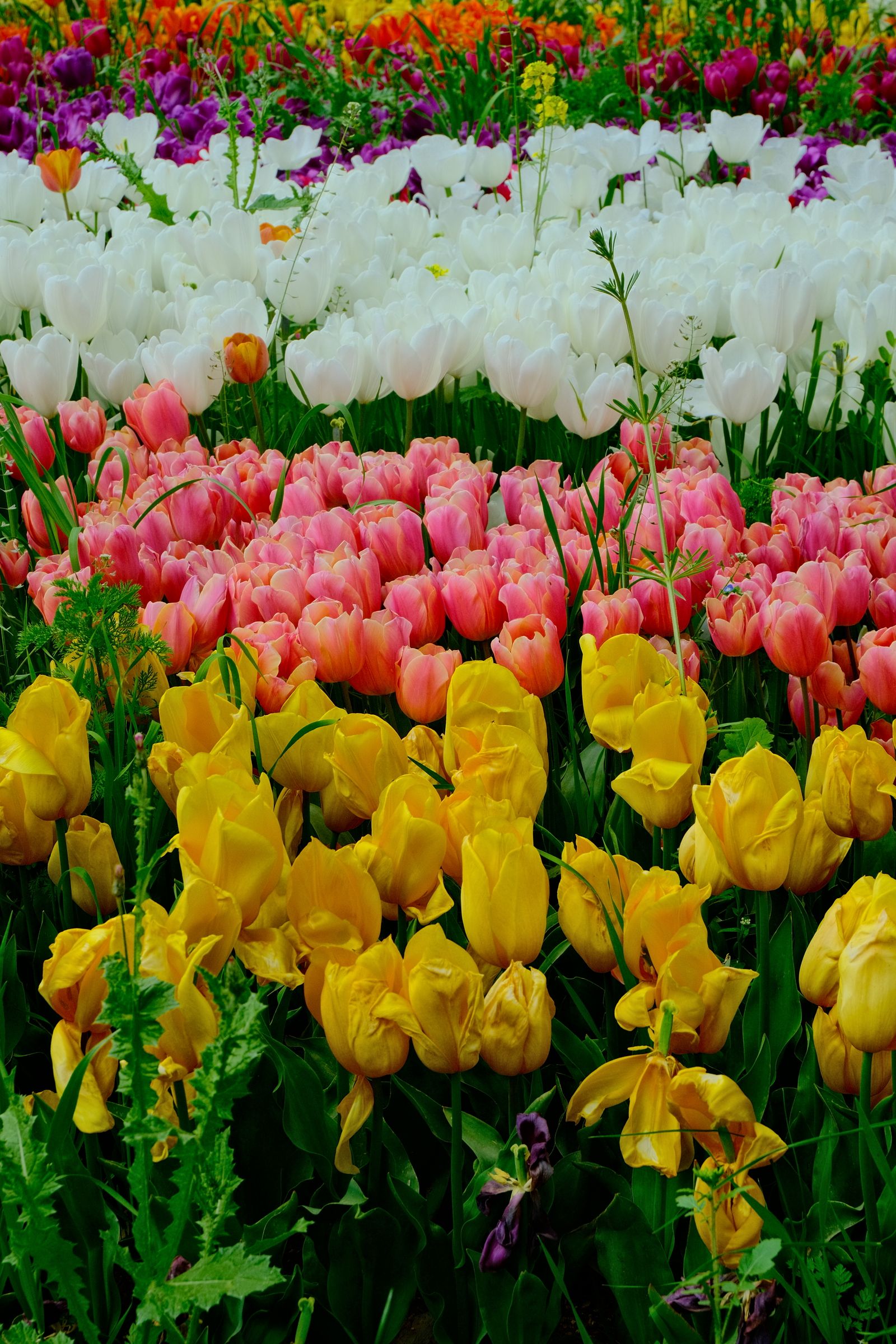
Repeat a few colours and plant compatible flowers in groups large enough to notice. Include foliage as a visual pause. Begin with a limited selection so you can see what works before adding more varieties or another accent colour.
For flowers that tend to flop, position flower support rings before the stems become tall and difficult to gather.
Plan for changes through the season
Record typical flowering periods and identify gaps. Bulbs or later-flowering plants may help if they fit the conditions. Mark planting positions and install supports early where stems are likely to flop into surrounding flowers.
For seasonal bulbs, use a bulb planter and check each variety’s recommended depth and spacing.
Can annuals and perennials grow together?
Yes, when their growing needs and spacing are compatible. Leave access for replacing annuals without disturbing established roots unnecessarily.
Your next garden task
Lay out the nursery pots before planting, compare their mature sizes and remove any choice whose care needs conflict with the rest of the group.
Helpful supplies for this garden project
Choose only what supports the tasks above. These are optional supplies; check sizes, instructions and current details before buying.
- Fiskars Bypass Pruning Shears, 5/8-Inch Capacity — Use pruning shears for small stems; choose a suitable larger tool for thicker woody growth.
- BestNest Gardman Double Plant Support Rings, 10 Pack — For flowers that tend to flop, position flower support rings before the stems become tall and difficult to gather.
- Fiskars Bulb Transplanter with Depth Markings — For seasonal bulbs, use a bulb planter and check each variety’s recommended depth and spacing.